By Jeremy Diouf
Learn how psychology drives marketing success. Discover key principles, buyer psychology, and effective strategies to boost conversions and revenue for your business.
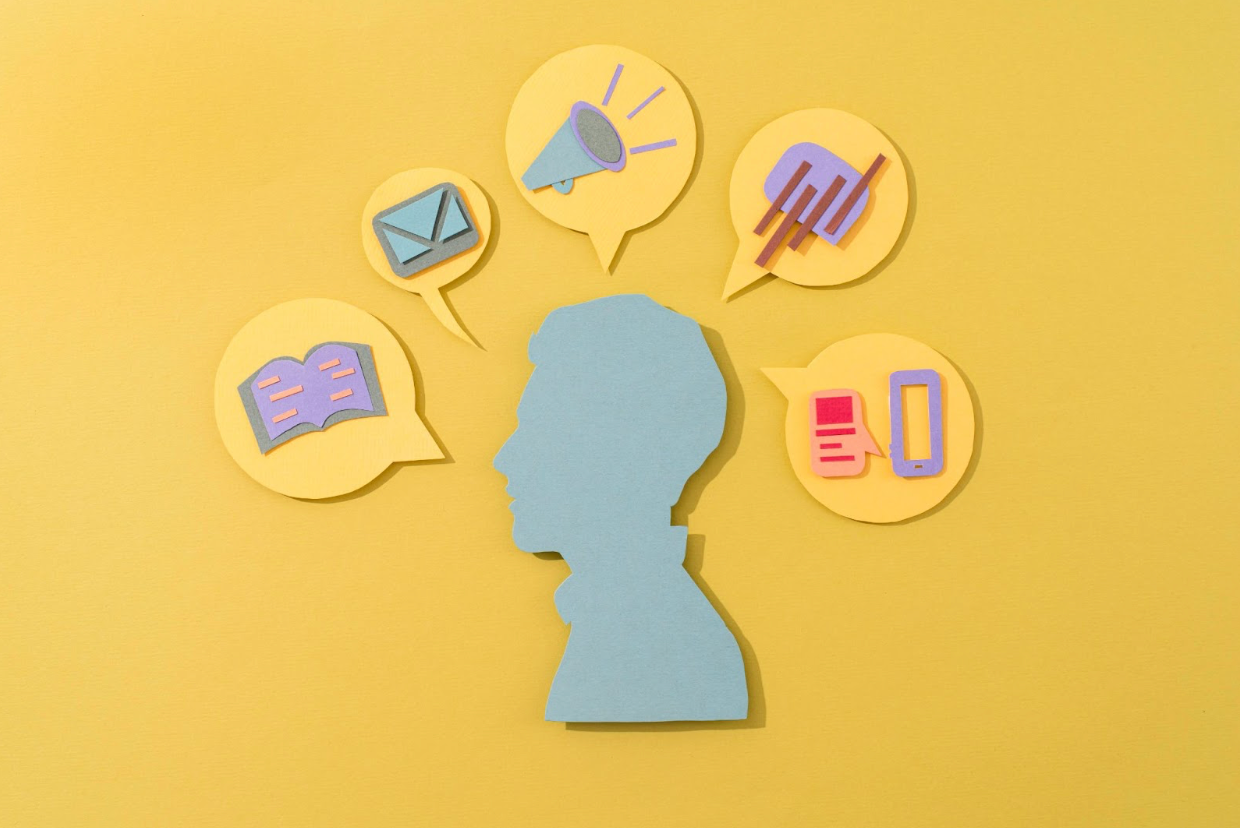
Marketing thrives when it aligns with how the human brain actually makes decisions.
Psychology and Marketing are FAR from being separate disciplines. Every headline, price, testimonial, and urgency cue taps into predictable human behavior patterns.
This understanding offers a powerful edge to business owners who make the connection, and in this article, you’ll discover some key ways psychology shapes buyer decisions. By the end, you’ll have a good understanding of how to apply the insights.
How Psychology & Marketing Are Deeply Intertwined
Psychology and marketing are both related to understanding human behavior and influencing decisions.
Every effective campaign taps into how people think, feel, and act. If you’re a business owner, this can open the door for:
- Higher engagement with your content
- Stronger customer loyalty (i.e., higher average lifetime value of a customer)
- Measurable revenue growth
Many marketers and business owners make the mistake of not incorporating proven psychological principles into their campaigns, with the result that their messaging falls flat. Copywriting doesn’t convert, and marketing graphics can’t stop readers from scrolling past your key messages.
A simple psychological tweak can mean the difference between a lot of booked calls on your calendar and none.
Effective marketing applies psychological insights to guide consumer choices.
Customers rarely act based solely on features or the price of an offer (AKA logic). Instead, they respond to their own emotions, biases, and mental shortcuts.
For example, in 2020, 87% of consumers read online reviews for local businesses. It is increasingly common for customers to seek “social proof” before investing in a product or service.
Companies that understand the power of social proof pack it into their marketing, whether through testimonials, case studies, or “Customer Spotlight” posts featuring satisfied customers.
When marketing aligns with natural human tendencies, it becomes exponentially more effective, helping reduce resistance (indecisiveness, mistrust) and increasing consumers’ potential for action (decisiveness and trust).
Psychology-based Marketing Drives Wanted Outcomes
Marketing’s primary task is to leverage psychology to achieve optimal revenue outcomes.
For example, the best headlines grab attention by triggering curiosity.
If you don’t hook the reader with a good headline that makes them curious to read more, they won’t engage with the page. And if they don’t read the entire page, the likelihood of converting them with your call to action (or their even seeing it) is low.
Another example of psychology applied to produce better outcomes is your pricing strategy.
Offering multiple pricing tiers utilizes your prospect’s natural “anchoring bias” to your advantage by shaping perceived value.
For instance, a $1,000 product may seem high to someone in your target demographic, until placed next to your $2,000 product and your $3500 product. Then, maybe not so much.
These elements work because they align with how the brain processes information: quickly, emotionally, and often subconsciously.
These tendencies kick in faster than logic, which is why focusing your efforts on them will yield better outcomes.
Studies show that emotions drive the majority of purchasing decisions, not logic.
Gallup polling proves that 70% of buying decisions stem from emotional factors, and only 30% from rational factors.
Other sources like Harvard Business School, suggest that 95% of purchasing decisions are subconscious.
When customers buy, logic tends to justify the choice after the emotional pull occurs.
Business owners who prioritize emotional pull in their marketing, copywriting, and even sales messaging over lists of product features tend to get stronger results.
How Psychology Came to Shape Modern Marketing
Modern marketing has its roots in the early 20th century, when Edward Bernays showed how psychological influences could shape public opinion.
As Sigmund Freud’s nephew, Bernays drew on psychoanalysis to understand the unconscious desires of people.
He focused more on evoking emotions and aspirations than previous marketers had before him.
One technique he popularized was associating products with social ideals.
For example, he linked cigarettes to women’s liberation by staging a “Torches of Freedom” march during New York’s 1929 Easter Parade. This tactic used media coverage to begin normalizing women’s smoking, vastly expanding his client’s market.
This was a key example of how subtle psychological framing can drive mass behavior change.
His 1928 book, Propaganda, is about “engineering consent,” and it emphasizes the controlling influence of emotional appeals.
These methods evolved into today’s consumer marketing, where brands sell lifestyles, status, and feelings rather than merely products.
Business owners benefit from this legacy by focusing on desire fulfillment. A product’s specifications are not what sells the product.
While its specifications still have their place (their value depending on the industry), evoking emotion is a key component of marketing a product or service.
Inside the Buyer’s Brain: Why People Actually Buy
People buy to fulfill deeper needs, often tied to Maslow’s Hierarchy of Needs.
This is a psychological pyramid that covers the following:
- Physiological Needs – Air, food, water, shelter, sleep, etc. (basic needs)
- Safety Needs – Personal security, resources, health, property
- Love & Belonging Needs – Friendship, intimacy, friends/family
- Esteem Needs – Respect, self-esteem, status, freedom
- Self-actualization – Desire to be the best version of themself
Needs that are lower on the pyramid (ie, less critical than physiological and safety needs) typically have more emotional pull than higher needs, unless someone has already satisfied those lower needs.
Knowing your market is a great place to start, providing clarity on the needs they’re most likely trying to fulfill. Sometimes they have multiple needs all at once, and sometimes it takes more research and critical thinking to figure out the prospect’s truest area of need.
For example, if you’re selling business consulting services to CEOs, you might think that they want your service to help drive more revenue. It would be a common assumption that their highest priorities fall under a “physiological or safety” need, given its link to money.
Yet you might be wrong. Through research and market analysis, you might find that it’s actually an “esteem need” that they’re looking to fulfill.
By making more money with their companies, they elevate their status, and it allows them to brag to their friends and family. So, your subtle marketing messaging could speak to your customer’s increase in status (if your service helps them make more money).
Remember, people tend to buy products and services to experience a positive end state, not for the product itself.
This end state is always rooted in an emotion they want to experience.
Get this:
Recent studies have shown that some 86% of people rated at least one emotional need as highly important in their decision to buy something.
Also, in these same studies, people aimed to satisfy 10 emotional needs with EACH purchase.
This is the power of applying psychology in marketing: you meet people at how they think, without needing to do so much heavy lifting.
Think about it: a drill is purchased for the hole it creates. This is logical, but the real emotional motivation is the pride of accomplishment or the satisfaction of a successful home improvement.
Think about how psychology shows up in the buyer journey:
- Awareness – sparks attention through emotional triggers (curiosity, relatability, frustration, etc.).
- Consideration – builds trust to overcome resistance (testimonials, case studies, education)
- Conversion – A product or service is bought because of its perceived added value (gain) or how it helps a customer avoid losses.
Be sure to map your customer journey to identify their constraints to purchasing.
Then consider what psychological and emotional adjustments you can make to remove that block.
It could mean showing more social proof, focusing more on ROI (return on investment), or increasing their status.
All markets and products are different, so consider multiple potential factors. If you need help with this, schedule a call with The Allyson Group for help with your brand communication.
7 Psychological Principles Every Business Owner Must Know
Here are 7 psychological principles from psychologist and author Robert Cialdini to help you market more effectively:
- Reciprocity – People like to return favors. Offer free value first, such as content, guides, samples, or tools, to encourage immediate or future purchases.
- Scarcity – Limited availability increases desire and perceived value. Limit what’s available or leverage time-bound offers. Scarcity does well in consumer-based industries like e-commerce.
- Authority – Credibility builds trust. Creating high-value content is a great approach for building authority. Certifications, associations, and media mentions help a lot, too.
- Social Proof – People tend to follow others. Feature testimonials, case studies or review counts to boost trust and sales. With case studies, make sure to create them with a specific demographic in mind.
- Liking – Similarity and rapport increase agreement. Use relatable language, customer stories, or shared values in your content to create a genuine connection. This is especially important if you’re a one-person business.
- Commitment and Consistency – Small commitments lead to larger ones. Start with free trials or opt-ins to get people into your funnel. Then, layer on products or services with varying levels of value to create a value ladder that customers can ascend through.
- Unity – Shared identity helps strengthen bonds. Consider creating an email list, community membership, or rewards program to deepen customer connection. This invites repeat buying, helping increase both customer loyalty and customer lifetime value.
Cognitive Biases in Action: Mental Shortcuts That Earn You Revenue
Cognitive biases are biases that all humans have. You can leverage them in your marketing for better results. Here are key cognitive biases to apply in your marketing.
- Loss Aversion – Losses feel twice as painful as the good feeling of gains. Think of farming your offers in a way that helps customers save or avoid loss. Loss aversion is also a significant factor in scarcity. Try opting for “Don’t miss out” messaging rather than “Gain this benefit.”
- Anchoring Bias – Again, the first information sets the reference point. Show original prices next to discounts to make deals appear even stronger. You can also anchor base pricing to higher cost products or services.
- Paradox of Choice – Unfortunately, too many options paralyze decisions. Make sure you limit packages to 2-3 and highlight the most popular to simplify choices. The last thing you want is to create mental overload!
- Mere-Exposure Effect – Familiarity breeds liking. Consistent content and ad retargeting help build preference for your brand or business over time.
How To Build An Effective Psychology-backed Marketing Plan
It’s time to create a plan that integrates these insights for consistent results.
- Audit your current assets (website, social posts, emails, ads, etc.) and apply everything mentioned in this article. What areas could use improvement? Consider which data points you think will improve based on what you implement (for example, maybe your customer lifetime value increases because you create a community).
- Prioritize 2-3 high-impact changes based on what needs improvement the most. Changing too many things at once may confuse you about what is and isn’t working.
- Scale what’s winning. Roll out successful changes across channels and monitor long-term metrics. For instance, if social proof is driving more booked calls on your landing page, consider adding it to your content to drive even more people there.
Be sure to track progress weekly and monthly to refine your approach.
Make Psychology Your Unfair Advantage
By applying proven psychological principles, business owners can create measurable growth.
Remember, small, targeted adjustments often yield outsized returns (even outperforming larger budgets).
Want to apply these insights with our expert guidance?
Partner with The Allyson Group to develop psychology-driven content and marketing that drives real revenue.
Schedule a consultation today and elevate your business results.